TTRPG vs board game: what’s the difference?
If you play board games and a friend keeps asking you to try Dungeons & Dragons, or it’s the other way round, this is the short version.
What is a TTRPG?
TTRPG stands for tabletop role-playing game. One person, usually called the game master or GM, describes the world and plays everyone the group meets. In Dungeons & Dragons the GM is called the Dungeon Master. Everyone else plays a single character and says what that character does. Dice and rules settle anything uncertain, like whether your rogue gets across the roof or through the window.
D&D is the best known TTRPG, but it isn’t the only one. There are hundreds, from horror to space opera.
What is a board game?
A board game gives you a set of rules, some components and a goal. You play inside the box. Nobody has to invent anything, and the game ends when somebody wins.
The differences side by side
| Board game | TTRPG | |
|---|---|---|
| Rules | Fixed. Everything that can happen is covered by the rulebook and the components. | A framework. The rules cover the common stuff, and the GM rules on the rest. |
| Goal | A clear win condition, such as most points or last one standing. | Usually no winner. The aim is to play through a story or a scenario. |
| Roles | Everyone plays the same sort of role. | One person runs the world. Everyone else plays one character. |
| Length | Typically one evening, often much less. | A single session is a few hours, and a campaign can run for months or years. |
| Prep | Open the box and read the rules once. | The GM prepares between sessions. Players mostly just turn up. |
| Examples | Catan, Ticket to Ride, Dungeon Shopkeeper | Dungeons & Dragons, Pathfinder, Call of Cthulhu |
The real difference
It comes down to who decides what’s possible. In a board game the rulebook does. In a TTRPG a person does, in the moment, so you can try something nobody planned for. That’s the appeal, and it’s also why a TTRPG needs more from the GM.
Where they overlap
The line is blurrier than it sounds. Some board games borrow from RPGs: you play a single hero, level up, or play a campaign over several sessions. Some TTRPGs lean on maps, miniatures and tidy combat rules that feel a lot like a board game. Plenty of people play both and don’t think about the difference much.
Quick answers
What does TTRPG stand for?
TTRPG stands for tabletop role-playing game, a game where players describe what their characters do and a game master runs the world.
Is D&D a board game?
No. Dungeons & Dragons is a tabletop role-playing game. It has no board, no fixed win condition and no fixed rules for everything that can happen.
Do you need a game master to play a TTRPG?
Most TTRPGs have one. A few are designed to be played without one, and some can be played solo.
Is a TTRPG harder than a board game?
Different rather than harder. There is less to set up, but the game master has more to prepare and players have to improvise.
Which should you try first?
If you want a finished evening with a clear winner, start with a board game. If you want to tell a story with friends and don’t mind someone doing homework, try a TTRPG. If you can’t decide, a board game with a fantasy theme and a sense of humour is a decent bridge between the two.
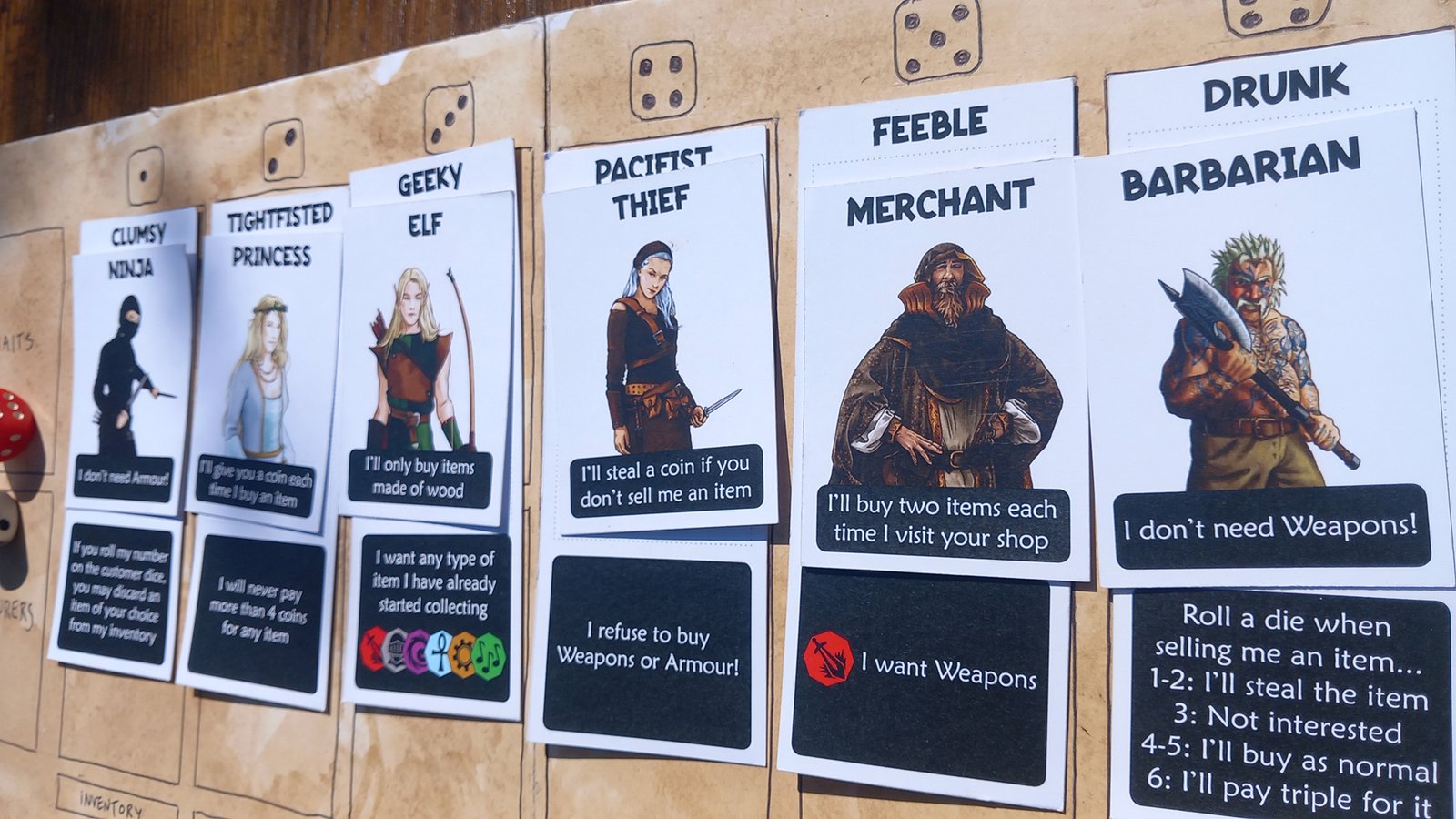
Dungeon Shopkeeper is on the board game side, with a joke borrowed from the TTRPG side. In a campaign the shopkeeper is a non-player character, an NPC played by the GM, who exists to sell the party a rope. In Dungeon Shopkeeper you’re that NPC, selling gear to the adventurers. You can read more on the game page, or browse board games for TTRPG players.